


Walking through the gates of Sorell School in southern Tasmania, one thing is immediately clear: this is a community deeply invested in the wellbeing of its young people. The passion and drive of teachers radiate through every interaction. From the way they greet their students to the warmth with which they welcome guests. This enthusiasm was front and centre during a recent visit with Rebecca White MP, Assistant Minister for Health and Aged Care and proud Sorell School alumna, who returned to meet Year 7 students who had recently participated in the OurFutures Vaping Prevention Program.
The visit provided a powerful snapshot of what happens when evidence-based prevention, strong relationships, and empowered students come together to create a safe and supported learning environment.
Strong relationships at the heart of school wellbeing
Throughout the visit, PDHPE teacher Em Paton reflected on what a “safe and supported” school looks like. For her, it begins with something deceptively simple yet incredibly profound:
“It starts with strong relationships, putting our students at the centre of everything we do. Then it’s about empowering them. Giving them the information to make choices. It’s not our job to tell them what to do; it’s about empowering them to say no.”
This philosophy, prevention over punishment, is deeply embedded in how Sorell School approaches wellbeing. Rather than reacting to behaviours after problems arise, Em and her colleagues look for opportunities to build knowledge, skills and confidence upfront. The OurFutures Vaping Prevention Program provided a tool to do exactly that.

Rebecca White MP, Em Paton, Kelly Dyer and Year 7 Students
Prevention made practical: Using OurFutures as a ready-made teaching tool
Sorell’s Year 7 cohort completed the federally funded OurFutures Vaping Prevention Program in Term 2, 2025. According to Em, the program made it easier for teachers to deliver accurate, engaging prevention content without the burden of extensive preparation.
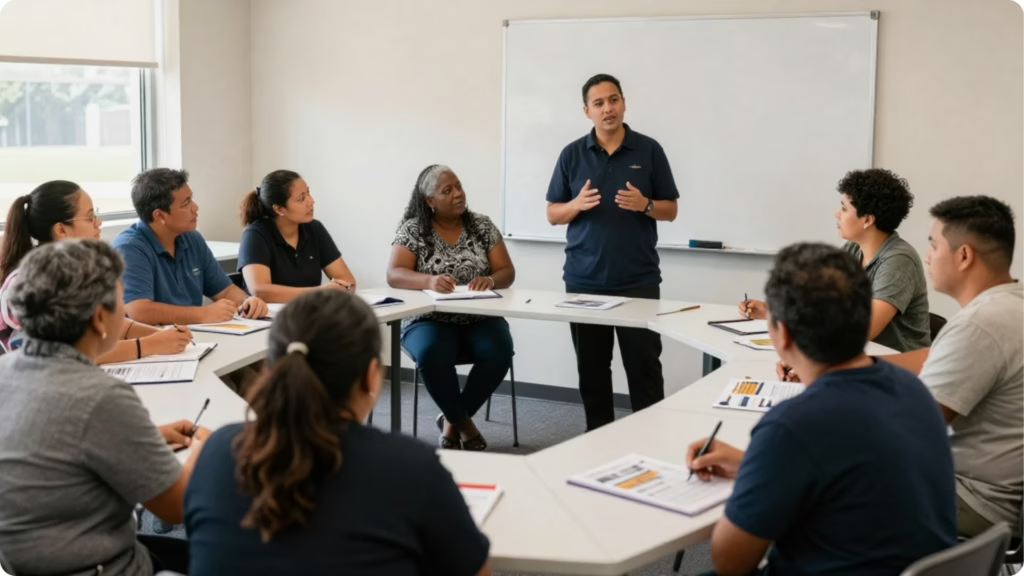
The lessons, which combine interactive animations, relatable storytelling and practical refusal strategies, became a springboard for open conversation in the classroom. Students were able to unpack myths, explore risks, and understand the real physical impacts vaping can have on their bodies.
Most importantly, they were able to practise real-world refusal skills, learning how to respond if a friend or peer offers them a vape, and how to navigate those tricky moments without losing connection.
Students leading the conversation with courage and confidence
A highlight of the visit came when four Year 7 students, each having completed the program earlier in the year, sat down with Rebecca White MP to share what they had learned. Despite the natural nerves that come with meeting a political leader, the students spoke clearly and confidently about vaping, its risks, and the skills they now have to make healthier decisions.
Rebecca White was struck not only by their knowledge, but by their sense of agency:
“I was so impressed at the knowledge the students of Sorell had about the dangers of vaping, but I think the thing I was most impressed by was how empowered they felt to make good decisions for their health.”
The students went on to share what they had learned with the OurFutures team, explaining that they now felt more confident saying no because they understood the physical effects of vaping and had practised refusal skills they could use if they were ever offered a vape.
Their confidence underscored the impact of prevention-based education, arming young people with tools, not fear.

Rebecca White MP with Year 7 students at Sorell School
A whole-community approach to youth health prevention
The ministerial visit also highlighted the strength of Sorell School’s relationships with community partners, teachers and families. Anthea Jirgens, OurFutures Institute’s Head of Partnerships, summed it up beautifully:
“Speaking with the teachers today, it’s clear their passion and commitment to the health and wellbeing of students is remarkable. Sorell is leading the way in creating a culture of prevention and care.”
This collaboration demonstrates that prevention isn’t solely the responsibility of schools. It is strengthened by shared commitment, from government and educators to researchers, community organisations and students themselves.

Head of Partnerships, Anthea Jirgens on ABC Drive Tasmania
Celebrating the story in the media
We were grateful to see the story shared across local media, including:
- ABC Drive Radio, and
- The Mercury, which published a feature article highlighting the visit and Sorell’s proactive approach to vaping education.
This visibility helps shine a light on the important work schools like Sorell are doing to protect and empower young people.
A vision for healthier futures
Sorell School is a powerful example of what happens when prevention is prioritised. Teachers feel supported. Students feel capable. Conversations become easier. And the entire community benefits from young people who are informed, confident and ready to stand up for their wellbeing.
As the visit wrapped up, Rebecca White MP left with a clear sense of pride, not only in her former school, but in the students who represented it with maturity beyond their years.
And for the OurFutures team, it reaffirmed what we see across Australia: when you give students the knowledge, skills and support they need, they thrive. They make healthier choices. They uplift each other. And they become the leaders of safer, stronger school communities.
Watch the Sorell School Testimonial Video
Hear directly from Em Paton and Year 7 students about how the OurFutures Vaping Prevention Program is making a real difference.
Register your school today
The federally funded OurFutures Vaping Prevention Program is available to all Australian schools at no cost until mid-2028.
Register your school today and deliver evidence-based prevention that works.