
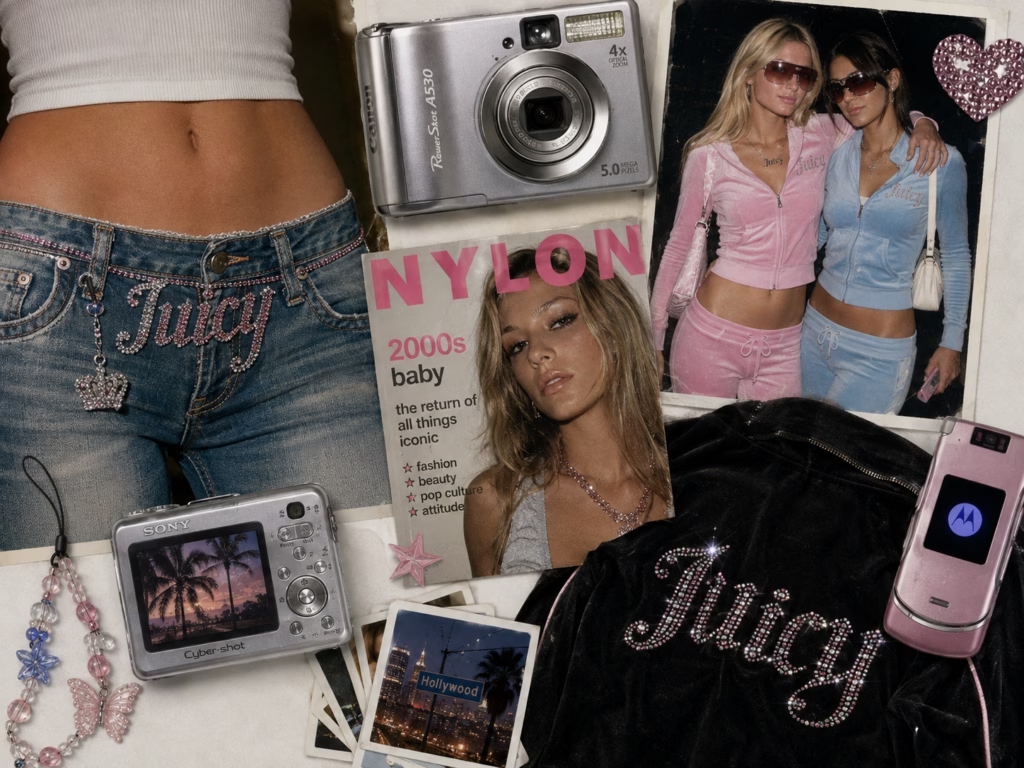
Somewhere between the low-rise jeans and the film photography filters, cigarettes have crept back into the cultural zeitgeist. They’re being held like props by models on runways, printed in glossy magazine spreads, and dangled from the fingers of paparazzi-photographed Hollywood A-listers.
What we’re witnessing is the return of early-2000s trends. Those of us who lived through that era the first time around remember that cigarettes were a must-have accessory to complement heroin-chic thinness and a messy-but-cool aesthetic. But now, teenagers are picking up the habit to complete a ‘look’ before they even consider the serious health implications.
It’s no secret that social and fashion trends are cyclical by nature. Cigarettes had their cultural moment in the 90s and early 2000s, after which point daily smoking among 18–24-year-old Australians fell from roughly one in six in 2011–12 to about one in fourteen in the most recent national data.
That result is the payoff of tax hikes and quit campaigns that go back decades, plus more recent measures like plain packaging that removed the allure of marketing from the equation.
But now, the 90s and 2000s are back again. The unsettling part is the contradiction at its core: we are, culturally, more fluent in wellbeing than any generation before us. Mental health is dinner-table conversation, ‘burnout’ has become a widely used phrase, and self-care is a mainstream concept.
It’s tempting to make this a story about villains and argue that designers, celebrities, models, actors, and magazine editors should know better than to restyle cigarettes as fashion accessories. But to do so would miss the real culprit: nostalgia.
Cigarettes are getting the same nostalgia treatment as flip phones and disposable cameras. The problem is that although these trends are being recycled, we cannot recycle our prevention efforts.
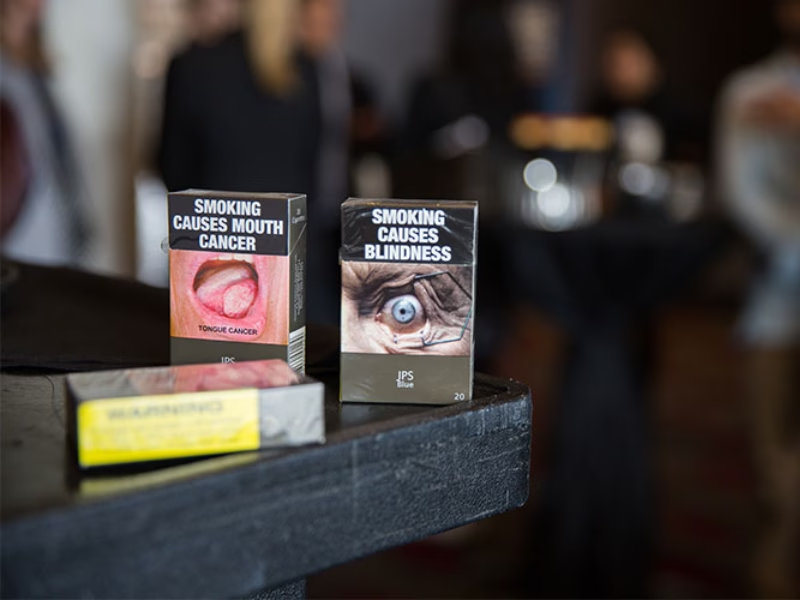
In an effort to curb cigarette use, Australia spent decades making them less socially desirable through fear-based prevention campaigns. If you’re old enough, you will remember seeing the photos showing you what a smoker’s lungs looks like and what nicotine addiction really means for your health.
Back then, these tactics worked, which is precisely why smoking rates are at historic lows. But that’s because in the 90s and 2000s, there was a real knowledge gap when it came to the health implications of smoking cigarettes. To successfully use that same approach in 2026, young people would need to be unaware that smoking is dangerous.
But that lack of awareness is no longer the problem.
A sixteen-year-old today can tell you the health risks of a cigarette with more fluency than most adults could in 1995. What they’re being sold now is a story, the one about rebellion, sophistication, effortlessness, and the status that comes with belonging to something dangerous.
We cannot out-fact a story like that. We have to give people something that competes with it on the same terms: identity, not statistics.
This is the real prevention opportunity: if a photograph on an Instagram feed can make smoking feel like belonging, prevention needs to use that same understanding of social influence to help young people notice it, in the moment, before the decision is made.
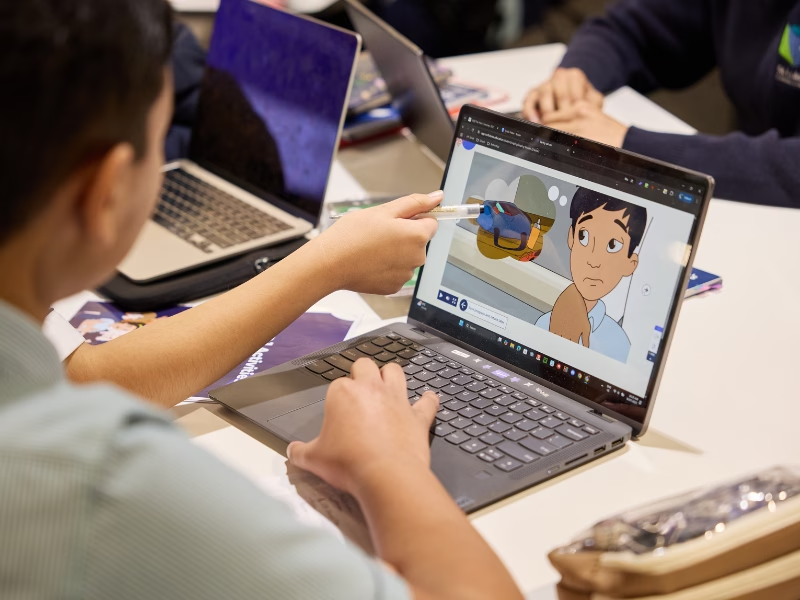
So, where do we start? Building modern media literacy is essential, because it will allow young people to identify persuasive content rather than fall victim to it. It’s also important that we explicitly understand why a rebellious or nostalgic image is so compelling to young people, instead of just insisting it’s bad for them and encouraging them not to fall for it.
Through it all, a harm-minimisation approach must be the baseline. This tactic treats young people as capable of weighing influence, not just receiving warnings. It also means giving young people real tools for the things smoking has always been a stand-in for: stress, self-consciousness, or wanting to seem ‘cool’ in front of people you’re trying to impress.
Most teenagers don’t have the money, time or freedom to simply ‘take a break’ the way the culture around them increasingly suggests they should. They need something to actually do with the pressure, not just a warning label for the unhealthy coping mechanisms they might reach for instead.
That’s what evidence-based prevention looks like in practice: a social-influence approach that empowers young people with the confidence, critical thinking and practical skills to navigate pressure, built early enough that the habit never gets a foothold in the first place.

Australia didn’t make cigarettes uncool by accident, and we shouldn’t let nostalgia undo it by accident either. The old narrative on offer now is a rerun, and reruns are easy to sell because they ask nothing new of anyone.
The more compelling story is the one prevention can actually give young people: real confidence, real connection, and the skills to handle pressure without needing a deadly prop to do it for them. We did it once, and with the right prevention tactics, we must do it again.
Prevention has to keep pace with the pressures young people face.
At OurFutures Institute, we translate prevention science into practical, evidence-based education that helps young people recognise social influence, navigate pressure and make informed decisions about alcohol, vaping and other drugs.
Because the goal isn’t simply to tell young people what not to do. It’s to give them the skills and confidence to decide for themselves.
Explore OurFutures’ evidence-based prevention programs: