
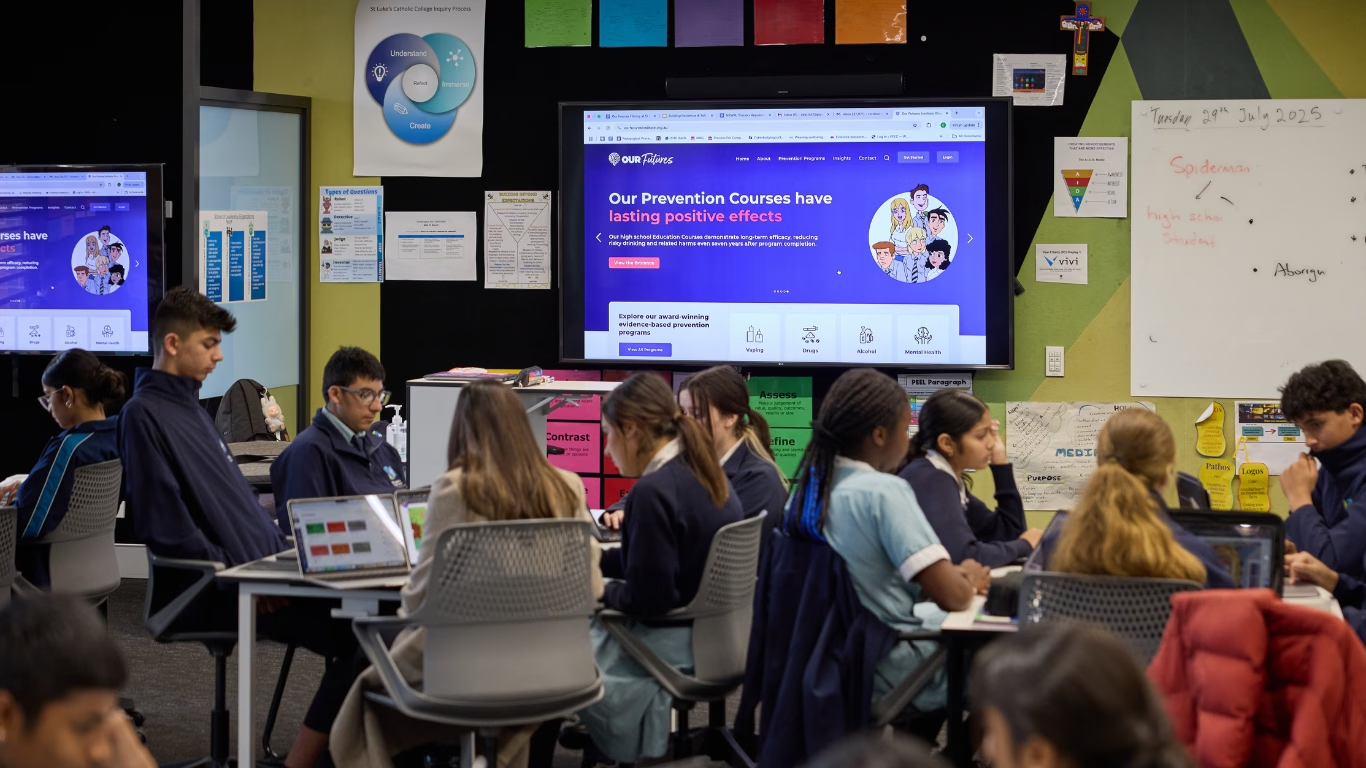
As Australian states move to reduce classroom screen time, schools are rethinking how digital technology is used in teaching. Here’s what the changes mean for educators and how OurFutures prevention programs can continue to support student health and wellbeing without adding to individual student device time.
Across Australia, education departments are introducing or exploring new restrictions on screen time in schools, responding to growing concerns about excessive device use and its potential impact on student learning, concentration and wellbeing.
New South Wales, Victoria and Western Australia are among the states moving towards stricter classroom screen time policies, with changes expected from 2027.
For teachers, these changes raise important questions about how to balance reduced screen exposure with access to engaging, evidence-based educational resources.
The good news is that reducing individual screen time doesn’t mean removing digital learning altogether. Technology can still play an important role when used purposefully, particularly through teacher-led learning using interactive whiteboards.
What are the new school screen time policies across Australia?
Screen time policies differ between states, with some introducing specific daily limits and others trialling approaches to reduce unnecessary device use.
New South Wales (NSW)
Implementation: Term 1, 2027 (recommended guidelines); 2028 (mandatory)
NSW has announced plans to introduce some of Australia’s strictest classroom screen time restrictions in public schools, with daily limits based on students’ year levels.
The proposed limits are:
- Preschool: No individual student device use.
- Kindergarten to Year 2: Maximum 15 minutes per day.
- Years 3–4: Maximum 30 minutes per day.
- Years 5–6: Maximum 45 minutes per day.
- Years 7–10: Up to 25% of lesson time per subject.
- Years 11–12: Up to 50% of lesson time per subject.
Schools will also be required to incorporate at least one hour of pen-and-paper learning each day, alongside restrictions on digital homework before Year 5.
The guidelines are expected to commence in Term 1, 2027, becoming mandatory in 2028.
Source: ABC News – New screen time limits in NSW public schools
Victoria (VIC)
Implementation: Term 1, 2027
Victoria is introducing classroom screen time restrictions across public schools, building on existing mobile phone bans.
The announced approach includes:
- Prep to Year 2: Minimal screen use.
- Years 3–6: Maximum 90 minutes of classroom device use per day.
- Secondary schools: Maximum two hours of classroom device use per day.
Additional restrictions on smartwatches and headphones have also been reported.
The changes aim to reduce reliance on laptops and tablets while encouraging more face-to-face teaching, handwriting and classroom interaction.
Sources: The Guardian – Victoria classroom screen time restrictions | Nine News – Victorian school screen time limits
Western Australia (WA)
Implementation: Proposed school trials in 2027
Western Australia is exploring a back-to-basics approach to classroom learning, including reducing unnecessary screen time in primary schools.
The state has announced plans to trial restrictions on non-essential digital device use, encouraging greater emphasis on handwriting, reading, physical learning resources and face-to-face teaching.
Unlike NSW and Victoria, statewide daily screen time limits have not been confirmed.
Sources: ABC News – WA school screen time restrictions | 7NEWS – WA primary school screen time trials
South Australia (SA)
Implementation: To be confirmed
South Australia has been identified as another state considering stronger measures to manage classroom screen time.
However, specific daily limits and a confirmed implementation date have not been established in the sources available for this article.
Schools should continue to monitor announcements from the South Australian Department for Education.
What about the other Australian states and territories?
Queensland, Tasmania, the Australian Capital Territory and the Northern Territory also have policies governing student digital device use, including mobile phone restrictions in schools.
However, these should not be confused with broader limits on educational screen time during lessons.
At the time of writing, no equivalent statewide classroom screen time caps or implementation dates have been established in the sources reviewed for these jurisdictions.
 What are Australia’s national screen time recommendations?
The Australian Government’s 24-Hour Movement Guidelines recommend that children and young people aged 5–17 limit sedentary recreational screen time to no more than two hours per day.
Importantly, these recommendations relate to recreational screen time, rather than educational screen use required for schoolwork.
The distinction matters because not all screen time serves the same purpose. Watching entertainment videos, independently using a laptop and participating in a teacher-led lesson using an interactive whiteboard are different learning experiences.
There is currently no single national classroom screen time cap applying to every Australian school.
Do the new screen time restrictions affect OurFutures prevention programs?
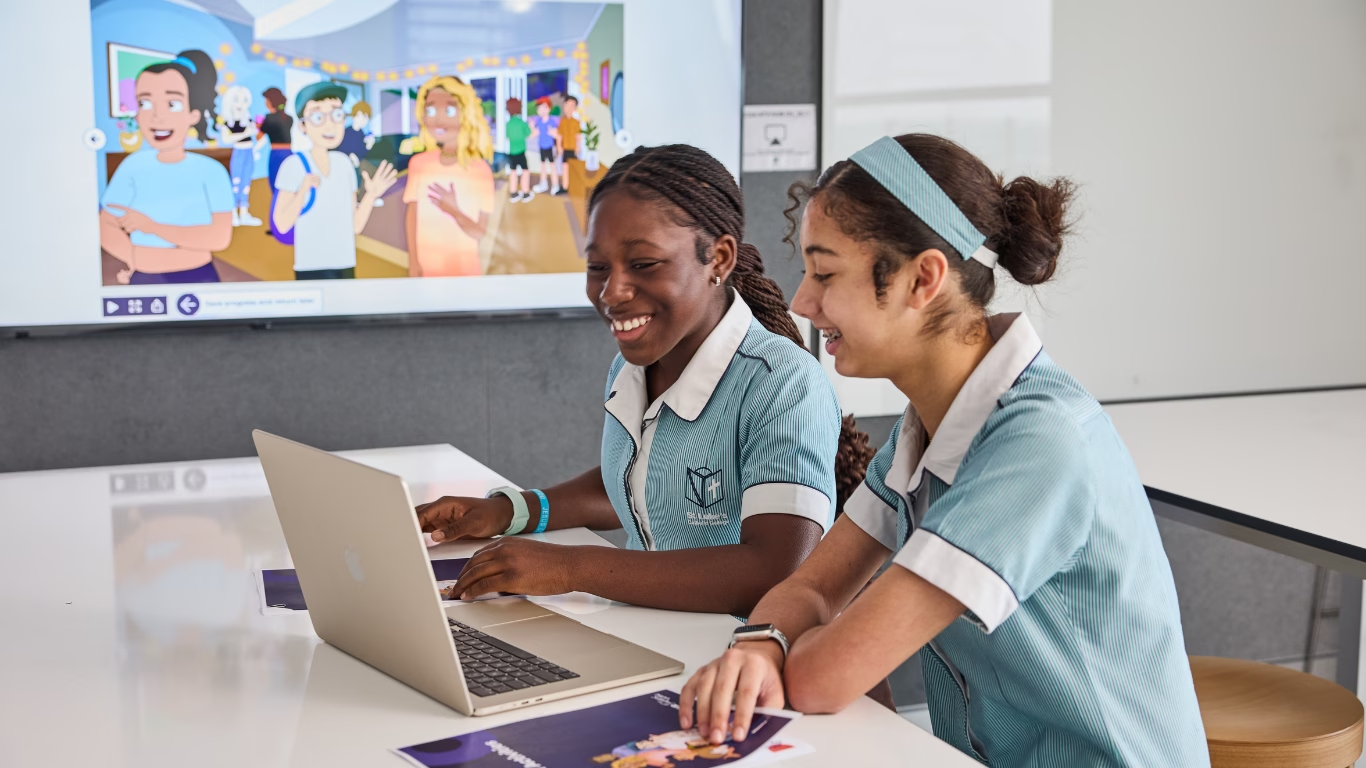
OurFutures prevention programs can be delivered using interactive whiteboards, meaning students do not need to use individual laptops, tablets or other personal devices to participate.
OurFutures provides evidence-based prevention education programs designed to equip young people with the knowledge and practical skills to make positive decisions about their health and wellbeing.
Our curriculum-aligned programs cover important topics including vaping, alcohol, drugs, mental health and healthy lifestyle behaviours.
Each program combines:
- Engaging, relatable cartoon storylines featuring real-life situations young people may encounter.
- Interactive learning activities and quizzes.
- Teacher-facilitated classroom discussions.
- Worksheets, role plays and practical activities that encourage students to apply what they’ve learned.
Typically, lessons combine a 20-minute cartoon storyline with approximately 20 minutes of teacher-facilitated learning activities.
By displaying the program on an interactive whiteboard, teachers can deliver the digital component to the whole class without requiring individual student screen use.
This approach supports collaborative learning, encourages discussion and enables schools to minimise individual device use while continuing to deliver engaging prevention education.
Whether teacher-led whiteboard viewing is excluded from a particular screen time cap will depend on the wording of the relevant state policy and any departmental guidance.
Supporting healthier screen habits through Health4Life
OurFutures also recognises the importance of helping young people develop healthier relationships with technology.
Our Health4Life Prevention Program, designed for students in Years 7 and 8, addresses six key health behaviours linked to adolescent physical and mental wellbeing.
These include physical activity, healthy eating, limiting sedentary recreational screen time, getting enough sleep, and avoiding alcohol and tobacco use.
Through relatable stories, classroom discussions and practical activities, students learn about the benefits of healthier lifestyle choices, including reducing recreational screen time.
Research evaluating Health4Life found that students who completed the program demonstrated greater intentions to improve their sleep duration and reduce screen time compared with students receiving usual health education.
Finding the right balance between technology and learning
As Australian schools prepare for changes to classroom screen time policies, the focus is shifting towards more intentional and balanced technology use.
Reducing unnecessary individual device time doesn’t mean schools need to sacrifice engaging, evidence-based education.
OurFutures programs combine digital storytelling with teacher-led discussions, worksheets and practical learning activities, helping schools deliver meaningful health education without relying on individual student devices.
With OurFutures, schools can continue to prioritise student health and wellbeing while adapting to changing classroom screen time expectations.
Explore OurFutures prevention programs
Discover our curriculum-aligned, evidence-based prevention programs for Australian secondary schools and how they can be delivered through interactive whiteboards and teacher-led classroom activities.