
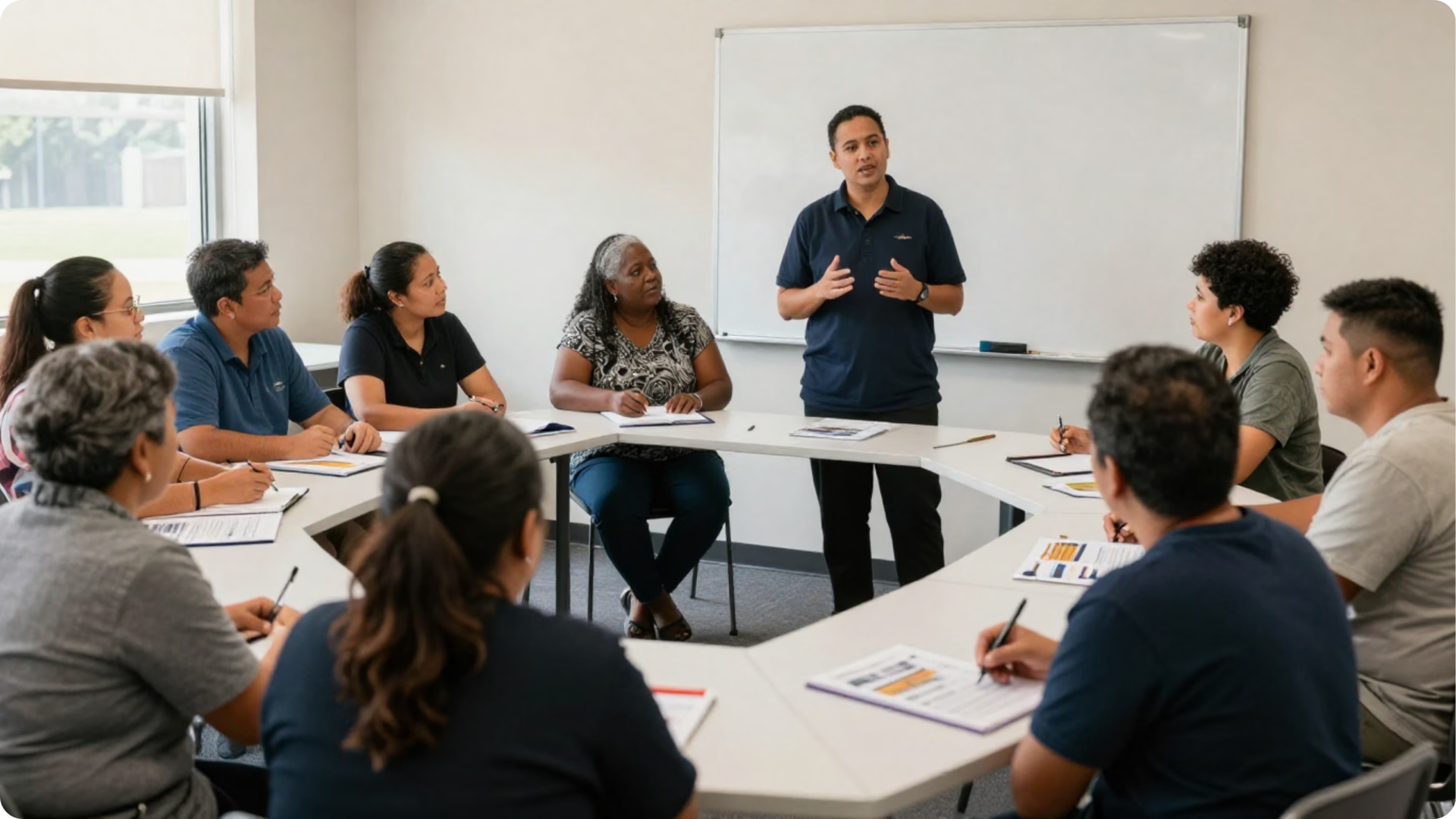
Teachers understand their students better than anyone. They see the issues emerging in classrooms, playgrounds and peer groups long before they appear in research, reports or statistics.
That’s why listening to educators is an important part of how we work at OurFutures Institute.
Recently, we brought together educators and industry experts from schools across Australia to hear directly about the challenges they are facing, the topics becoming more important for young people, and what schools need from health and wellbeing education providers.
Participants represented Government, Catholic and Independent schools, from small through to large school communities and across metropolitan, inner-regional and outer-regional Australia. They included HPE teachers, wellbeing and health staff, school leaders and coordinators.
The message was clear: schools want evidence-based education, but it has to work in the reality of a school environment.
Teachers are balancing more than ever
Health and wellbeing education doesn’t exist in isolation.
Teachers reminded us they are balancing curriculum requirements, student wellbeing priorities, emerging issues, different programs and providers, limited budgets and finite classroom time.
One educator described the reality as having to continually add reactive elements in response to events and issues as they arise. Others highlighted the financial pressure schools are under and the challenge of implementing valuable programs when funding and staff capacity are limited.
Importantly, teachers didn’t necessarily see using multiple providers as a problem. More than eight participants said their school used multiple health and wellbeing providers and many valued having different options available.
What mattered more was having the flexibility to choose what works for their students, their curriculum and their school context, and making these choices with confidence.
Student needs don’t stand still
One of the strongest themes from the conversations was the need for flexibility.
Schools may plan their health education in advance, but teachers also need to respond to what is happening with their students right now.
Across Years 7–10, educators identified a broad range of issues they are navigating, including mental health, vaping, alcohol and other drugs, relationships, bullying, social media, consent, peer pressure, identity, puberty, gambling, sexting, online safety and risky behaviours.
The priorities also change as students move through adolescence.
- Year 7: identity, relationships and navigating adolescence
- Year 8: vaping and emerging risk behaviours
- Year 9: alcohol, drugs and risky decisions
- Year 10: mental health and safer decision-making.
This reinforces something important: effective prevention education needs to recognise where young people are developmentally, while still giving schools the flexibility to respond to the needs of each cohort.
Teachers want learning students can actually use
We also asked educators what outcomes matter most when they assess health and wellbeing education.
The most frequently identified outcome was knowledge and understanding, followed closely by practical skills and confidence.
Educators also identified behaviour change and safer choices, mental health and resilience, growth over time, student engagement, and help-seeking as important measures.
In other words, delivering information isn’t enough.
Teachers want to know that students understand what they have learned and can apply that learning when navigating real situations, whether that’s resisting peer pressure, assessing risk, supporting a friend, regulating emotions or knowing when and how to seek help.
Evidence matters, but so does practicality
Schools also told us that choosing a health and wellbeing program isn’t usually one person’s decision.
Decisions can involve school leadership, HPE or PDHPE leaders, wellbeing teams, year-level leaders and classroom teachers. For larger commitments, around three different roles were typically involved in the decision-making process.
And when educators are considering a program, they want practical information.
They want to understand the evidence and outcomes, but they also need clear curriculum mapping, implementation requirements, staff capacity considerations and a concise explanation they can take to other decision-makers.
The findings also showed that decisions about new programs are predominantly made in the year before implementation, with Term 4 the most frequently identified decision period.
That’s an important reminder for organisations like ours: making evidence-based education available isn’t enough. We also need to make it practical for schools to understand, evaluate, plan and implement.
Listening has to lead to action
For us, these conversations weren’t about asking educators to validate what we already thought.
They were about listening carefully, including when the feedback challenged our assumptions.
Teachers told us they value choice. They need flexibility. They need to respond to emerging student needs. They are working within significant curriculum, budget and capacity constraints. And they want evidence-based approaches that make sense within the realities of their school.
Those insights matter.
At OurFutures Institute, our work is grounded in evidence, but it also needs to be grounded in the experiences of the educators delivering prevention education every day.
Research tells us what works. Teachers help us understand how it needs to work in practice.
And we intend to keep listening.